“Notwithstanding she shall be saved in childbearing, if they continue in faith and charity and holiness with sobriety.”
σωθήσεται δὲ διὰ τῆς τεκνογονίας, ἐὰν μείνωσιν ἐν πίστει καὶ ἀγάπῃ καὶ ἁγιασμῷ μετὰ σωφροσύνης.
Scrivener’s Greek nt 1884
God gave through Paul distinct instruction for males and females in 1 Timothy 2:8-15, instructing them concerning their distinct designs and concerning their mutual design. In verse 8, Paul introduced the first gender-related instruction to the ἄνδρας, that is, the men. In verse 9, he introduced instruction to clarify God’s design for the γυναῖκας, the women. This instruction for the women continued into verse 11, where Paul changed from the feminine plural, γυναῖκας, to the feminine singular, γυνὴ, continuing to speak about women but in the singular.
This singular number continued into verse 13 where Paul related the foundation of his current instruction back to Eve, the first woman. At the end of verse 14, Paul called Eve ἡ γυνὴ, “the woman,” and in the next clause stated σωθήσεται, 3rd person singular (understood feminine gender), “she shall be perserved”, but quickly switched to the plural in the next clause with μείνωσιν subjunctive Aorist Active, “they continue” (with an understood “subjunctivity”).
The reason for the number change is narrowed down by context. The number change was due to one of the following. To…
- …a switch from Eve, the woman, as the representative to those represented, the women, meaning, “if women continue….”
- …the addition of children to the instruction understood through the term τεκνογονία (see 1 Tim. 5, especially verses 10 & 14 for reuse of the root and restatement of female instruction), thus understood, “if the woman and her children remain….”
- …a change from speaking of the woman in isolation to the woman in the context of her marriage, placing her back with Adam, so to speak, in which case the meaning is, “If the man and woman continue…”
Some brief points supporting the interpretation in number 3:
- There are two people mentioned throughout the context whom God intended to continue together in faith and love and holiness, with safe-thinking.
- The issue is a switch from singular to plural. In the context, men and women are the focus of all that Paul is writing. The entire context is about the men and the women, from vs. 8 on, and specifically about man (singular) and woman (singular), represented in Adam (singular) and Eve (singular). Together, these make up the plural of μείνωσιν. Though children are included, they are only mentioned in the compound idea of teknogonia, not directly spoken of. Furthermore, if the children were the focus, then Paul could have clarified this by using a term such as “childraising” rather than “childbearing.” Though the Spirit made clear that His design for women normally includes childbearing and, therefore, child-rearing, He did so in a manner that placed children themselves in the background without diminishing their integral place in the life of womanhood. If the children were directly acting as part of the understood subject of μείνωσιν,teknogonia would certainly be a passing way of introducing them and does not carry the weight of the overall context. Furthermore, those women which are physically incapable of having children would still be included in the restoration and preservation expressed by σωθήσεται.
If man and woman—husband and wife and, therefore, “parents”—are the focus of μείνωσιν, then the children would certainly be included in the natural consequence, for they follow the parents. Just as in the beginning, the children are ruined because the parents do not remain (steady way of life) in the true design of God for life.
Understanding the plural subject of μείνωσιν as the woman and her children would put the focus on her oneness with her children, not her husband. If the subject is the man and the woman, however, it places the focus on their oneness before God and their inescapable interdependence—His perfect design for their oneness together in Him. It shows that the marriage relationship that was ruined at the fall can be restored on earth under the instruction of God (didaskalia, 1 Tim. 1:3-8) and establishes the continuity of God’s original design:
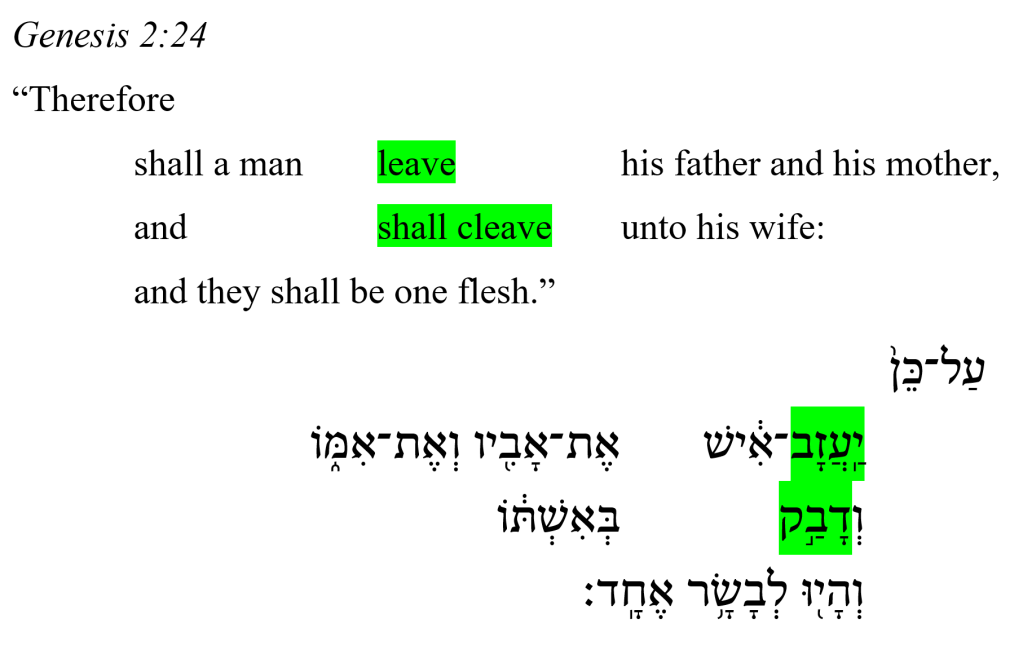
If both the husband and wife, each of them…together, are established growingly in God’s perfect design, under God the husband and wife will influence their children to be of the same heart and conform to the same life. She will, indeed, be saved from the deception of trusting her own personality, feelings, or intuition, and will be able to say of God, “According to thy name, O God, so is thy praise unto the ends of the earth” (Psalm 48:10), for she will be in accord with Him. Instead of spending her time in the inclination to become a busybody in other people’s lives, her attention will be drawn to the lasting and satisfying, if demanding, matters of the home in adding the full force of her participation to her husband’s work and to raising up a Godly generation of children, standing before them as a woman whose life is a bright display of God’s grace.
 Biblical Return